How Alliance Sport Alsace Basketball team Took the Guesswork out of Training
Catapult Sports
Key Takeaways:
- Alliance Sport Alsace’s physical performance staff replaced subjective training load estimates with objective Vector T7 and heart rate data, giving them evidence to back every conversation with coaches and players.
- Corentin Zuccaro built a microcycle model around the Match Player Load, setting a daily intensity target for every session that the coaching staff then translated into basketball drills.
- Catapult data reshaped the club’s pre-match routine and helped a depleted seven-man squad recover in time to win on a three-day turnaround.
Five Clubs, One Ambition
Northern Alsace sits on France’s border with Germany, a few kilometres from Strasbourg. It is not a region international basketball fans would name. In 2021, its clubs decided to change that.
Five local clubs merged into one: Alliance Sport Alsace, known simply as ASA. The new club took the professional licence of BC Gries-Oberhoffen and set itself a single target. Build a club capable of reaching France’s top flight.
Progress came fast. In 2025, ASA reached the Élite 2 promotion play-off final at the Forest Arena, one win from the Betclic Élite. They lost to Le Portel. A club that had existed for four years had come within a game of the highest level in French basketball.
The supporters call the team “Les Irréductibles”. The nickname fits a club built on doing more with less. But to keep closing the gap on bigger, better-funded rivals, ASA set out to raise standards across every part of the operation, including how it prepared its athletes.
That is where Corentin Zuccaro, the club’s physical performance coach, comes in.
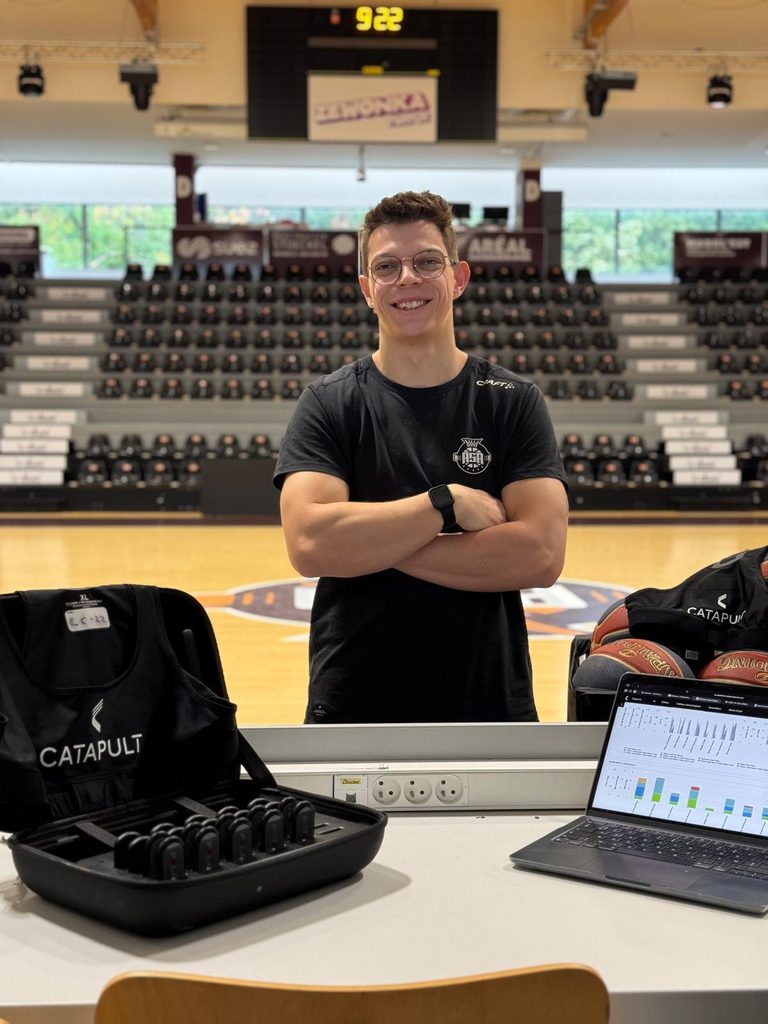
The Challenge: Taking Players at their Word
Before Catapult, Corentin’s only measure of training load came from the players themselves.
“I only had access to a subjective measure of training load,” he explains. “That’s essential, but it can’t drive the whole planning process. When you rely on players to report their own load, you have to keep taking their word for it.”
It also left him short of evidence when discussing load with the coaching staff. In basketball, the coach’s eye carries huge weight, and Corentin found that research and concepts delivered verbally rarely shifted a decision.
“Detailed, visible numbers back up any conversation,” he says. “Whether that’s increasing the load, reducing it, or individualising it based on minutes played.”
Self-reporting hid the detail Corentin needed most, too. Every player’s body absorbs mechanical stress differently, in different movement axes and at different intensities. Without seeing what each player had actually done in a session, he couldn’t tailor preparation to what that player would face in a game.
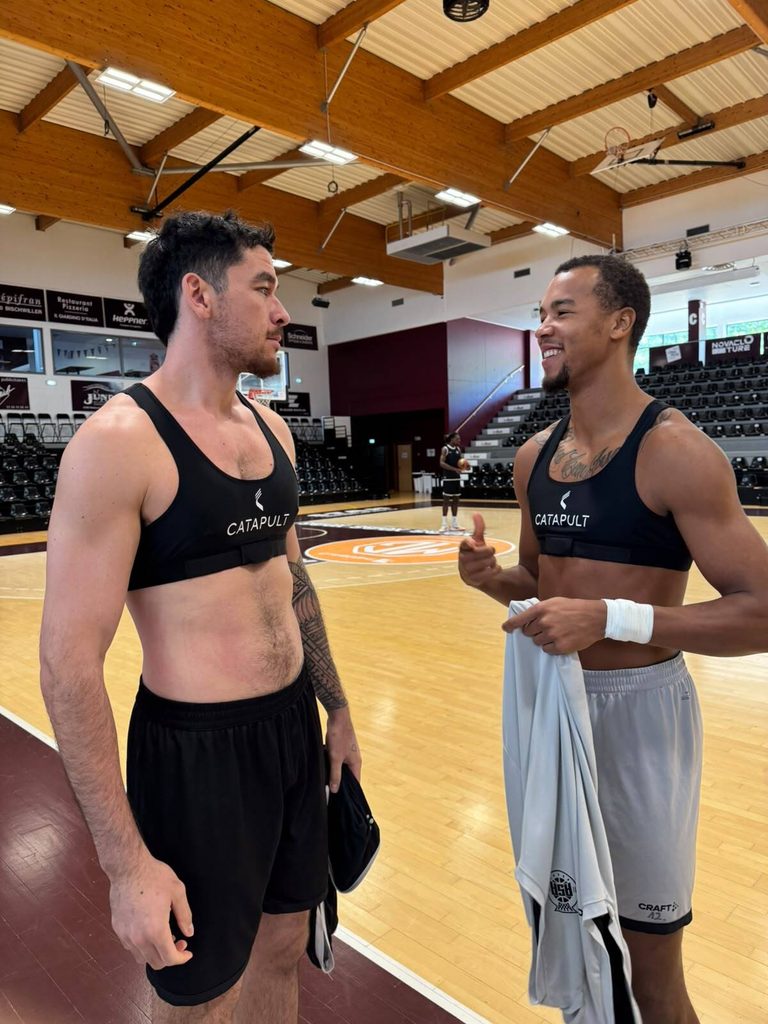
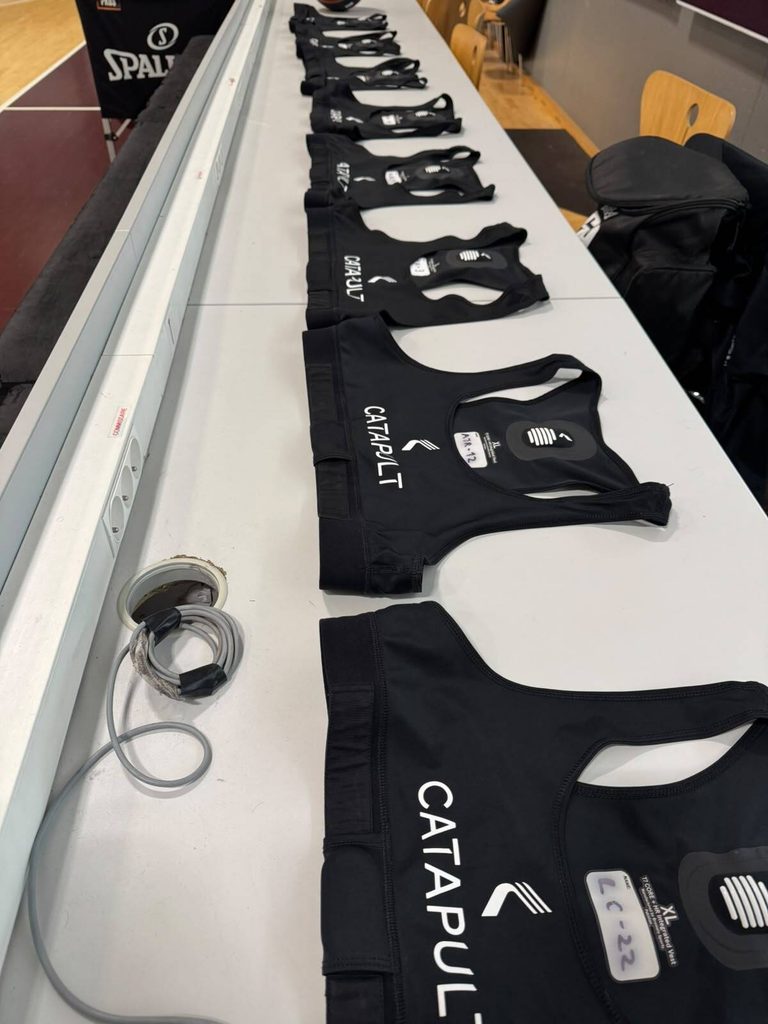
ASA equipped the squad with Catapult’s Vector T7, paired with Polar H9 heart rate monitors. Budget shaped the choice. So did the state of the research: heart rate in elite basketball has been studied extensively, while movement data is still catching up.
“Adding heart rate gave us a safety net,” Corentin says.
Together, the two devices show the mechanical stress on each player’s body and the cardiovascular cost of producing it.
A Week Built Backwards from the Match
Corentin’s system starts with the game. Every match produces a Player Load figure and an intensity profile. Those become the reference point for the week that follows.
For each training day, he selects a target intensity and a total Player Load based on how far away the next match is. The coaching staff then design their basketball drills to hit that target.
To check the drills are doing their job, Corentin tracks two things in every session:
- The full practice, every drill included.
- The five-on-five, game-style phases within it.
He compares the five-on-five numbers against real match intensity and sets the day’s goal accordingly. Reproduce match intensity. Or drop 20% below it. Or drop 50%.
The metric set stays deliberately small. Player Load and Player Load per minute. High-intensity efforts, measured as Player Load above band 4. Quality of work, expressed as the share of total Player Load that came at high intensity. Maximum and average heart rate.
The approach has already rewritten one part of ASA’s routine. The coaching staff’s standard day-before-match drill turned out to be too intense, costing players energy they needed the following evening. Corentin moved that drill to two days before the match and switched the eve of the game to half-court work only. The change has stuck.
Three Signals of Fatigue
The same data protects players between games. When Corentin sees maximum heart rate falling over several days, work intensity dropping, and a player reporting tiredness, he treats the combination as a warning. If the three signals line up, the club adjusts that player’s attendance and training volume.
Last season, that process was tested. Injuries left the team with seven available players. After an intense match, which they lost, the next fixture came three days later with two training sessions in between.
Corentin looked at the total Player Load and match intensity the seven had produced. On that evidence, the staff gave the squad an extra day off and replaced one collective session with video analysis and shooting.
“Every player came into the next match fresher,” Corentin says. “And we won it.”
From Panic to Pull
Players see the data too, with one rule: each player sees only their own results. That includes their Inertial Movement Analysis (IMA), the count of high-intensity accelerations, decelerations, left and right changes of direction and jumps they produced in training. The comparison is always with themselves, day after day.
The first reaction was anxiety.
“They panic to begin with,” Corentin admits. “They’re stressed about whether the coaching staff are happy with the training.”
That passed within days. Now most players ask for their results without prompting. They want to know where they can improve, and whether a technical or tactical problem on court connects to how they’re moving in practice.
“Most players come to appreciate the tool quickly,” he says. “They feel it helps them progress.”
Just Getting Started
Corentin is frank about where ASA stand. The club is at the beginning of its Catapult journey, and data still moves between departments less often than he would like. Few clubs at ASA’s level monitor their athletes at all.
The next step is to change how the information is used.
“In time, the idea is to share player information between staff so we can recruit better,” he explains. “Particularly when a player is coming back from injury.”
That would take the data from the training court into squad planning, so the physical profile of a player informs decisions about who the club signs and how it manages them.
For a club that reached a promotion final four years after it was founded, the ambition fits. Asked what he would tell another club considering Catapult, Corentin doesn’t leave room for doubt.
“Data has become indispensable for me in quantifying and individualising training,” he says. “If there’s budget to invest, don’t hesitate.”
“Catapult lets us reach a new level of understanding and analysis of our athletes. We aimed for performance.With Catapult, we’re achieving it.”
Q&A
Relying on subjective feedback hid the details the physical performance staff needed most. Without objective data, the staff lacked the evidence to adjust volume or individualize preparation. By adopting Catapult Vector T7 and heart rate monitors, ASA replaced guesswork with precision. This clarity allows them to measure the exact mechanical and cardiovascular stress on every athlete.
The performance team builds the week backwards from match day. Using the match intensity profile as a reference point, the staff sets a total Player Load and target intensity for each training day. Coaches then design their drills to hit those specific targets, ensuring the squad trains smarter as the next fixture approaches.
Data gives the staff a clear warning when fatigue sets in. When injuries left ASA with just seven available players and a three-day turnaround, the staff used Player Load intelligence to intervene. They gave the squad an extra day off and replaced a physical session with video analysis, ensuring the team recovered in time to win the next match.