Why Women’s Football Needs Its Own Benchmarks

Key Takeaways:
- Only 13% of elite football studies are made up of female-only research.
- 64% of practitioners report challenges monitoring female athletes due to limited female-specific research and data.
- 86% say sport-specific industry standards are necessary for defining thresholds in high-speed running, sprinting, acceleration and deceleration, yet 55% have no access to relevant reference values for the competition their players compete in.
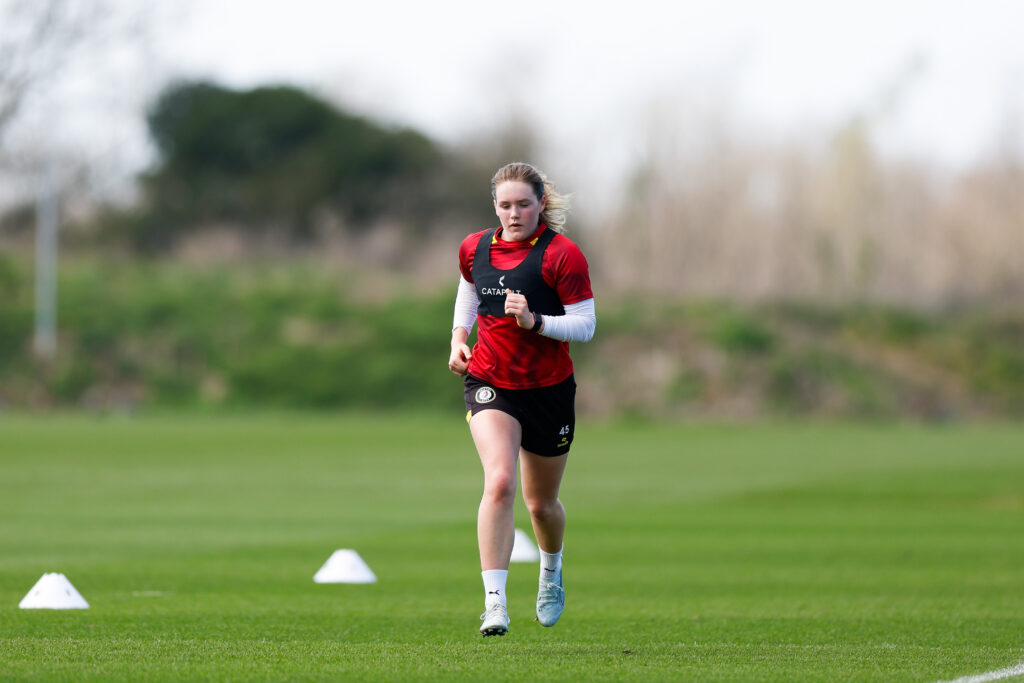
The research gap is no secret, with recent analysis of 722 elite football studies showing that 83% focus exclusively on men, while female-only research accounts for just 13%, with women representing only 7% of total participants. What is lesser known is the effect this has on the athletes who dedicate their lives to the game, particularly given that only one study has examined injury and recovery exclusively in female players, and 96% of studies including women fail to adequately account for menstrual status or ovarian hormones.
Load thresholds that could be miscalibrated. Injury risk reduction models built on physiological assumptions that don’t hold up to reality. Development timelines mapped against male athletic maturation curves that just don’t accurately reflect how female athletes progress. Every session, every decision about training load and every flag that an athlete is or isn’t in the red zone; all of them being filtered through a reference framework that wasn’t built for her body.
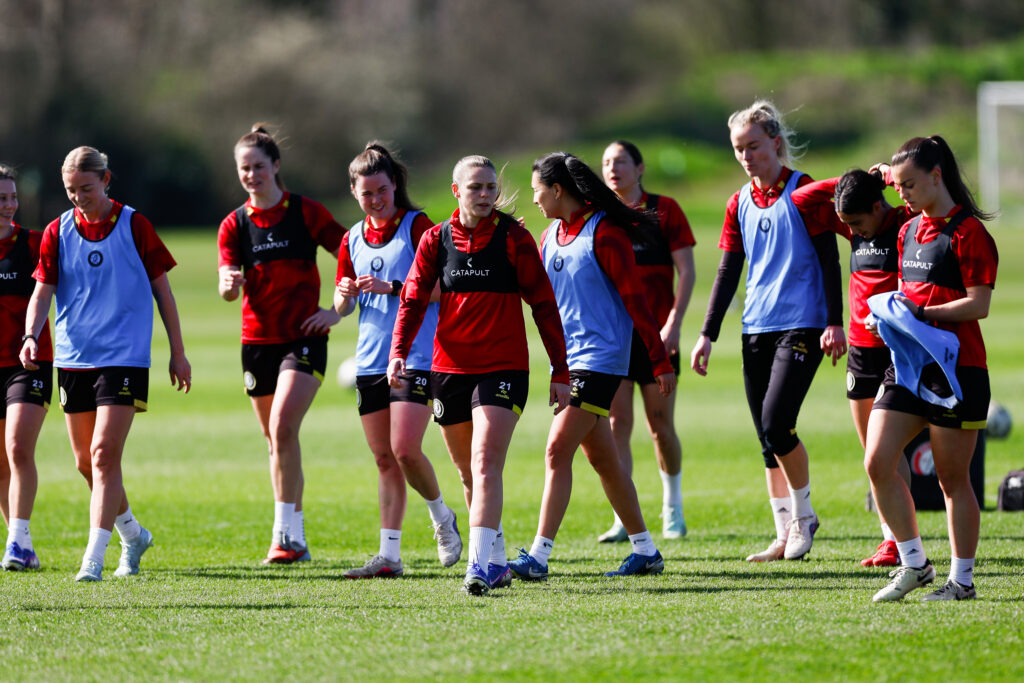
The tools exist but the baselines don’t. Yet.
Walk into most professional women’s football environments today and you’ll find sophisticated performance technology, from GPS units to accelerometers and heart rate monitors. The hardware and capability are there, and yet if you ask the sports scientist running the session what benchmarks they’re working with, the answer lets the sport down.In 2025, Catapult surveyed practitioners across the women’s game: 73 responses, spanning 11 sports, from EMEA to APAC and the Americas. Football accounted for 58% of respondents. What came back was glaring: that 55% of those practitioners had zero access to relevant reference values related to the competition their athletes play in, despite nearly 90% saying that sport-specific industry standards were necessary for defining thresholds in high-speed running, sprinting, acceleration and deceleration. And 93% said those reference values, i.e. the ones they don’t currently have, would be extremely valuable.
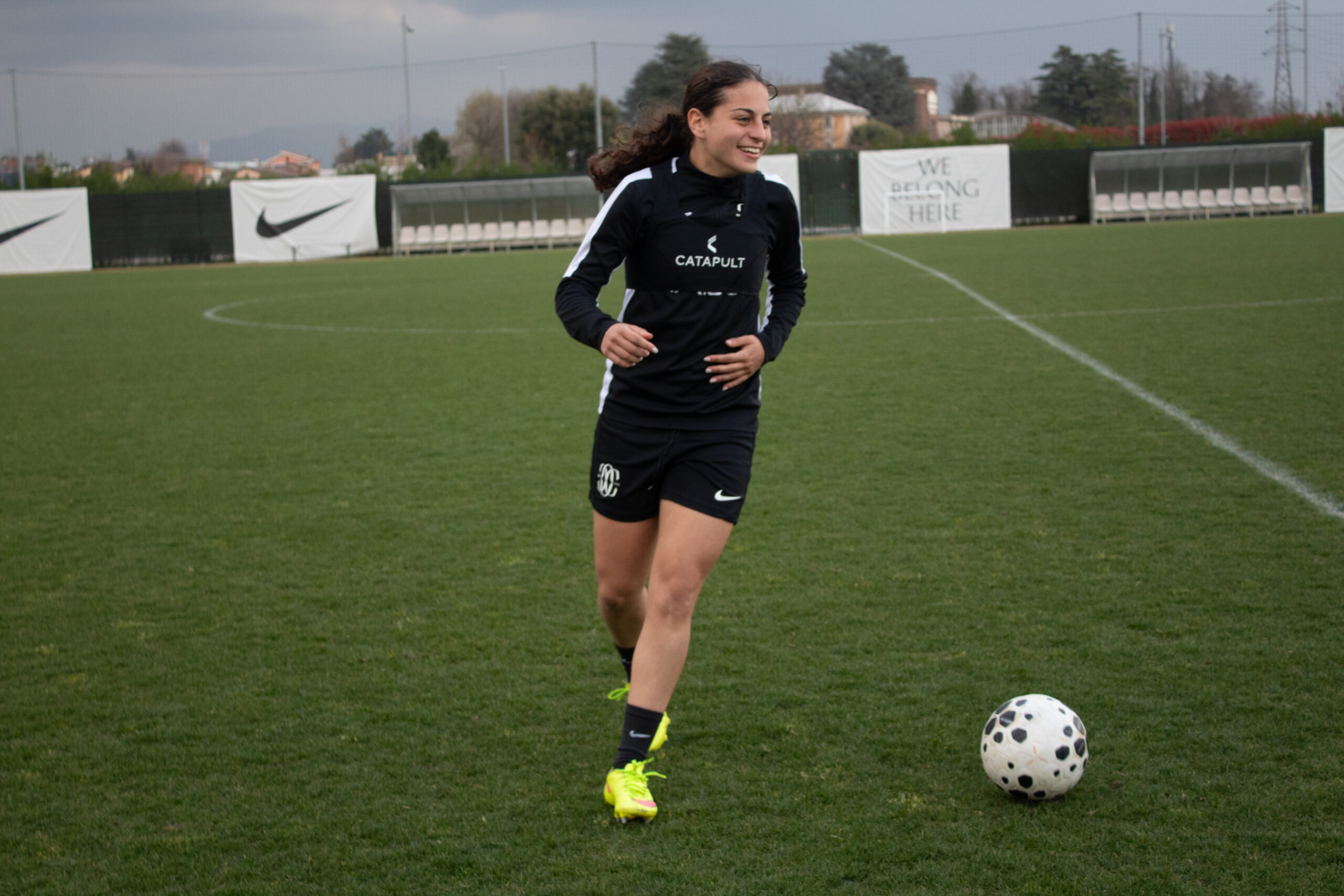
The compounding effect.
However, it isn’t as easy to solve as it may seem because it’s not just that female-specific data that is limited, it’s that the conditions for collecting it have only recently started to exist at scale.
Despite women’s football professionalising rapidly over the past decade, the longitudinal training histories that underpin reliable sports science benchmarks take time to accumulate. A male footballer who was at a professional academy at 14 has a decade of structured load data available to him by his mid-twenties. His female counterpart, for the most part, hasn’t had access to that same level of structured, monitored training environment. The benchmarks we’d need to build meaningful female-specific reference values are only now beginning to accumulate, in line with ever maturing professional women’s football infrastructure.
This really matters because the benchmarks we do have, that are borrowed or adapted from male sets aren’t just incomplete; they may be actively misleading. And to compound this, the smaller the female-specific data set, the harder it is to know how far off they actually are.
Later professional entry, shorter longitudinal tracking windows, and a narrower base of peer research, all amplify each other.
What the women’s game actually needs.
Consider a creative midfielder operating in “the pocket.” Their GPS data might show similar total diThe ask isn’t that complicated, even if the work that will go into it is.
Load management frameworks that account specifically for female physiology, not male thresholds with a correction factor applied. Injury risk reduction models built from women’s data, again not borrowed from men’s sports and adjusted. Athlete development curves that reflect when and how female footballers actually mature from an athletic point of view.
The 93% of practitioners in the survey who said they want further education specifically focused on female athletes aren’t asking for inspiration; they’re asking for information they can actually use every day, with thresholds they can trust and reference points grounded in the women they’re working with.
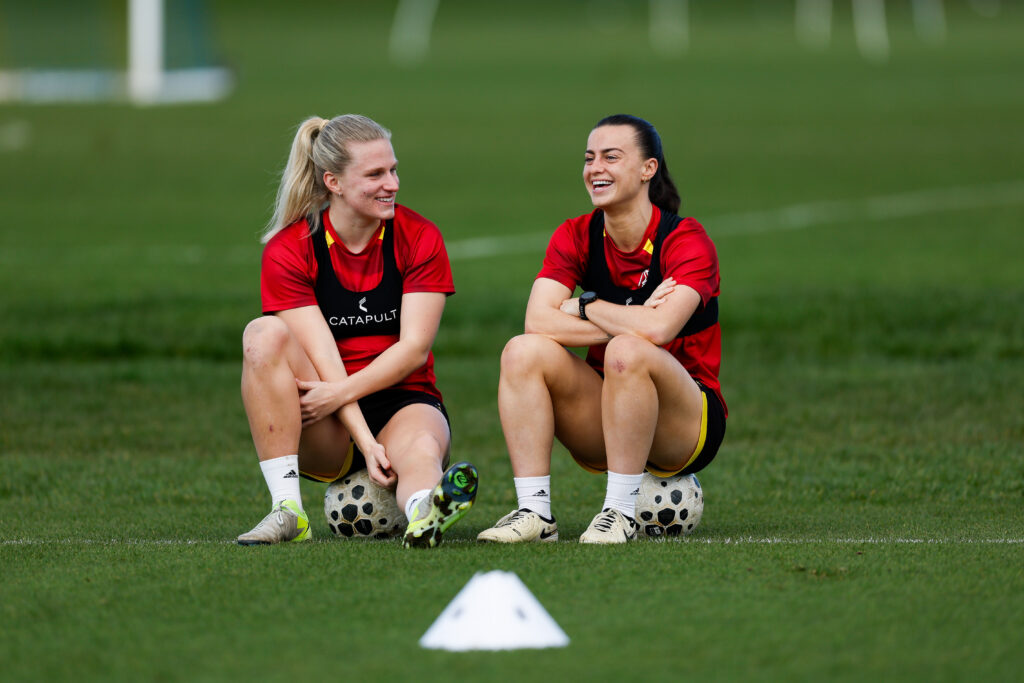
Mercury13 x Catapult: Building something better together.
As described above, different roles and spaces in football create very different movement demands. GPS cMercury13 and Catapult are now working together to begin building these benchmarks, from real data, in professional women’s football, across their portfolio of clubs in the UK, Spain and Italy. Catapult’s Sports Scientist Hannah Pitt said: ‘To drive meaningful progress in women’s football, we must move away from top-down research and embrace a bottom-up approach where we work directly with clubs to provide insights into the Women’s game. Alongside high quality research we also need education that addresses the specific realities of the female athlete.
As FIFA and UEFA reports show, the game’s intensity is increasing. Without bespoke benchmarks, we cannot properly prepare players for the physical and psychological load of modern schedules, travel, and training. However, this isn’t just an elite-level issue where there is significant travel, International duties and congested schedules. We also need to understand the loading across the entire pyramid to prepare youth players for the professional jump but also to address the ‘underload’ many domestic players face with reduced match exposure.
Crucially, these benchmarks must be specific to the female physiology and the whole female athlete should be supported prioritizing everything from breast health, pregnancy care and psychological well-being. It’s time our standards reflected the unique demands of the women’s game.’
The work has started, the data is being collected, and we’ll soon delve into exactly how having female-specific benchmarks can elevate the women’s game further.
- Clausen, E., Flood, T. R., Okholm Kryger, K., Lewin, G., McCall, A., Stebbings, G. K., & Elliott-Sale, K. J. (2025). Auditing the representation of elite female players in football performance and injury research. Science and Medicine in Football, 1–16. https://doi.org/10.1080/24733938.2025.2577442
- Catapult Survey, 2025