Your blind spot, solved: How velocity-based training creates better athletes.
Elite sport is about fine margins. Success and failure can be determined by centimetres or milliseconds.
As Mikaela Shiffrin descends the slopes in Italy at the Winter Olympics, she knows these fine margins may determine whether she wins gold or she misses out. Every athlete at the elite level has prepared for years to give themselves the best chance of success.
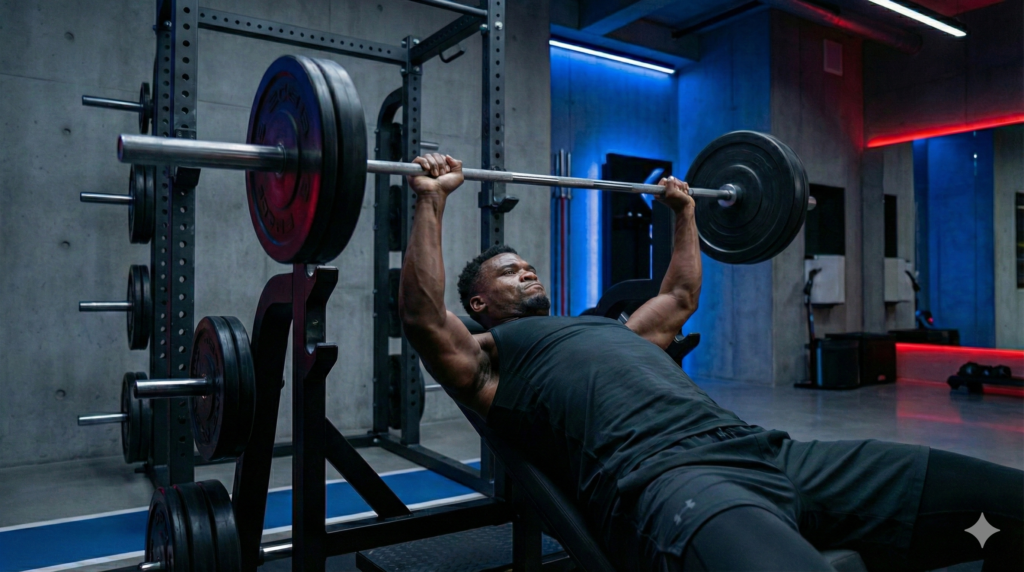
That’s where Velocity Based Training (VBT) comes in. Utilising video tracking technology through smart cameras, the velocity and power produced by the athlete is measured during lifting, providing coaches and athletes with real-time data to help assess, modify, or change their training as it happens.
The introduction of athlete movement data into the weight room can remove subjectivity and bias, and introduce facts and objective truths.
When implemented correctly, VBT is a valuable addition to a monitoring toolkit that both enhances athlete performance through objective data and builds a competitive culture inside elite organizations. Helping to close the gap between preparation and performance.
“VBT implemented correctly with elite athletes can definitely improve their outputs,” Matteo Magagnin — sports scientist, and PhD research student explained. “I believe VBT can give an extra boost to athletes competing at the highest level.
“Even a 1–2% improvement in performance may be the difference between success and failure at this level.”
Fine margins matter
As Al Pacino says in ‘Any Given Sunday,’ “life is a game of inches.”
That could be the 11 millimetres that came between the ball crossing the line when John Stones made his remarkable goal-line clearance for Manchester City against Liverpool in 2019, securing a key victory in City’s title-winning season. Or it could be the five-thousandths of a second that Noah Lyles won gold in the men’s 100m at the 2024 Paris Olympic Games.
Those fine margins frequently define key moments in elite sports. Often underpinned with preparation both inside and outside of the competitive arena.
One key pillar of an athlete’s preparation for competition is ‘gym’ based training – commonly referred to as strength training. Much of the research suggests that correlations exist between efficient strength training and improvement in performance outputs.
Take endurance running, where improvements in strength improved an athlete’s durability and increased their time to exhaustion. Or in Rugby League where lower body strength and maximal power were descriptive of an athlete’s playing level. It is the preparation of an athlete that can help define these fine margins that matter.

One of the methods by which coaches are preparing athletes for strength and power outputs is by utilizing VBT. As opposed to some traditional measures of training prescription and monitoring (E.g. Repetition Maximum), VBT has been shown to be consistently accurate when used to prescribe an athlete’s sets and reps. A benefit that allows accurate adjustments to an athlete’s program in real-time.
VBT uses enhanced video capture to track the movement of the athlete and weight lifted, as well as the velocity of that movement. It also utilizes complex machine learning to continuously evolve the accuracy of its data. Specifically, VBT focuses on the load velocity profile, a curve which shows how fast an athlete moves various weights.
The curve – which maps both speed and strength – can highlight an athlete’s performance by showing how quickly they can move a prescribed weight or what speed they should move a heavier or lighter load.
Over the long run, VBT allows for a highly individualized training program, boosting weight room performance and improving the athletic capacities that matter in an objective data-driven manner.
“The main benefit of velocity-based training is that it allows intensity and volume to be autoregulated based on objective, sensitive measures or performance,” Bas Van Hooren, assistant professor and elite athlete, said.
“Research consistently shows strong relationships between movement velocity, relative load, and proximity to failure, making velocity a practical proxy for neuromuscular stress. This means training can be adjusted in real time to maintain a desired stimulus, whether the goal is maximal strength, power, or speed-strength, while avoiding unnecessary fatigue.”
A statement backed by research that suggests using velocity loss (or when speed drops below an athlete’s targeted range) can help mitigate neuromuscular fatigue whilst still maintaining neuromuscular adaptations.
Van Hooren does exercise caution though and highlights the use of VBT in collaboration with other methodologies to capture the entire picture – “not all exercises or training qualities can be well captured by velocity metrics, and overemphasis on measurable outputs can risk neglecting technical, psychological, or long-term developmental factors that remain essential to athletic performance.”
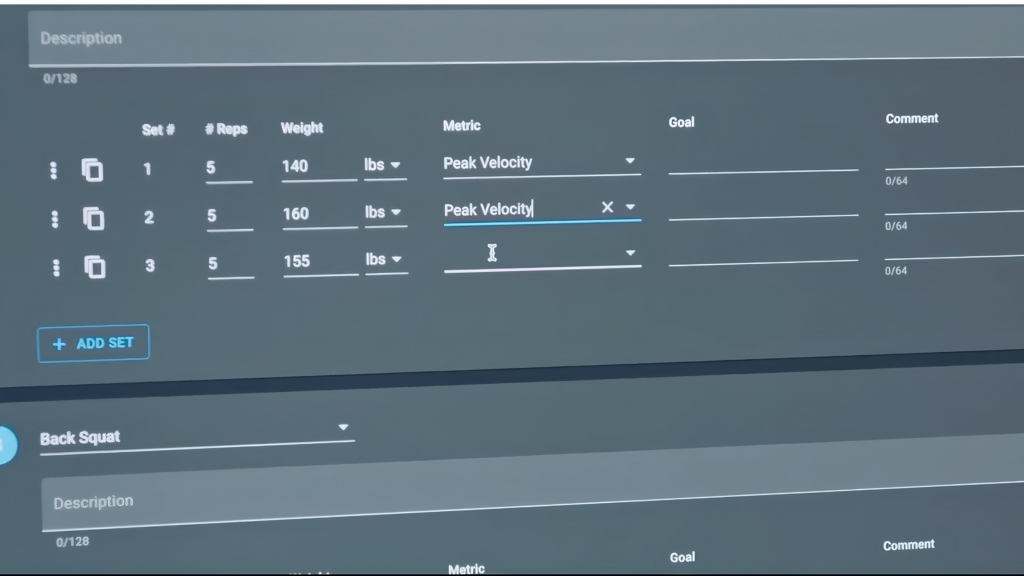
Culture changer
Weight rooms are an intriguing place. They can be a place of solitude, an athlete isolated, working to better themselves, or a place of atmosphere, where athletes come together to hone their craft and build towards success. It is a place of culture and standards and often a common meeting place for the athlete/coach relationship.
Fortunately, the weight room is also a place where technology can prosper. Van Hooren remarks that in his experience, “the availability of immediate data helps to inspire both coaches and athletes in their training” This statement backed by research that suggests immediate and objective feedback can improve motivation and performance of velocity and power outputs by up to 10%
“Coaches can reinforce intent, as athletes tend to move with greater focus and effort when they can see objective feedback in real time,” he said. “This data transforms the weight room into a more interactive environment, where coaching cues and adjustments are driven by measurable performance rather than assumption.”
Whilst many elite sporting organizations now utilize Perch’s VBT technology, one highlighted that they have seen a newfound approach to preparation thanks to the comparative nature of the data provided.
At the University of Maryland, the use of data has led to a more competitive attitude to the weight room. “It’s been a really great tool to hammer home the intent of each day,” strength and conditioning coach Wes Bordelon said.
It’s a similar story at other institutions, including the University of Pennsylvania and the University of North Carolina, with the latter’s football team utilizing VBT in their ‘Trap Bar Jump Shrug’ to stimulate competitiveness, with the aim to not drop below 3% of their best effort. As a result, the team has fostered an environment which pushes each athlete to push themselves to the max, something they see translate onto the football field.
Ready to move from VBT Theory to Practice?
Discover how Perch uses advanced video capture to provide the real-time, objective data your athletes need to peak.
Smarter, not harder
It might be a bad night’s sleep, or just one of “those days”, but sometimes, even a top level athlete may not feel at their best. When they enter the gym to hone their craft, they just don’t feel 100% ready to do so.
And that is backed by the numbers, with some suggestions that despite an athlete perceiving their variation in performance to be 1-3%, it has been shown that it can be as large as 18%. ‘One of those days’ now may have a larger impact than previously thought.
But how does one measure a decrement in performance? That blind spot can be in part solved by VBT which fills in the performance gap by utilizing its real-time objective data to flag when an athlete is outside of their normal, or targeted range. This proxy for identifying when an athlete may be having an ‘off-day’ can be viewed as critical in managing how an athlete feels and responds to a training stimulus.
Given the accuracy of VBT technology over other strength training methodologies, countering an athlete’s variation with a reliable technology may now seem like a logical choice.