Data as a Language: Bridging the Gap Between GPS and Tactical Reality
Key Takeaways:
- From “Scoreboards” to Language: Move beyond retrospective GPS “report cards” and treat performance data as a shared decision-making language that connects sports science directly to the coach’s tactical model.
- The GPS-IMA Hierarchy: Use GPS to monitor the “Engine” (physical capacity and volume) while leveraging Inertial Movement Analysis (IMA) to decode the “Driver” (movement quality, multi-directional intensity, and role-specific behavior).
- The “Unfamiliar Load” Signal: High load isn’t the primary driver of breakdown, unfamiliar load is. Layering IMA over GPS identifies subtle drifts in movement patterns, allowing for predictive training adjustments before performance drops.
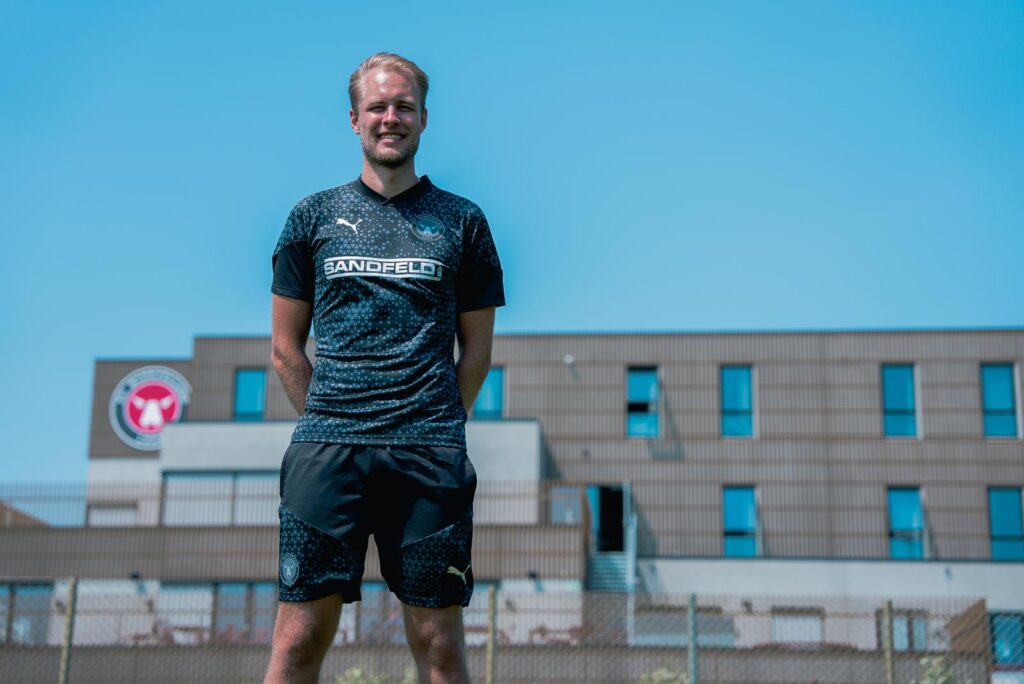
In elite football, we often hear that “data is king.” But for Niklas Virtanen, Head of sports science at FC Midtjylland, data is only as valuable as the decisions it drives. For Niklas, the challenge isn’t just tracking how far a player runs; it’s understanding the context, mechanical cost and tactical behaviours behind every meter covered.
“The industry has spent a decade perfecting the ‘scoreboard’, the post-match GPS totals,” Niklas explains. “But the future of sports science isn’t in looking at these numbers in isolation. It’s about building a shared language where GPS and other performance data streams, such as Inertial Movement Analysis (IMA) work together to describe football behaviours.”
In collaboration with Catapult, Niklas is championing a “Practitioner-First” approach to data, one that starts with a key performance question and ends with a decision rule.
DEFINING THE FOUNDATION: GPS AND THE PHYSICAL “BUDGET”
To understand the nuance of IMA, one must first respect the foundation: GPS. Metrics like Total Distance and High-Speed Running (HSR) are the essential baselines of any high-performance program.
For Niklas, GPS provides the foundational picture of physical exposure. It helps staff to:
- Understand whether players have accumulated enough load to tolerate the demands of competition, and whether training cycles are building robustness rather than fatigue.
“GPS tells us whether the “Engine” is there” says Niklas. “It ensures the athlete is physically capable of stepping onto the pitch. It’s a non-negotiable layer of preparation and safety. But football isn’t all about the engine- once the engine is running, we need to know how the car is being driven.”
WHY IMA MATTERS

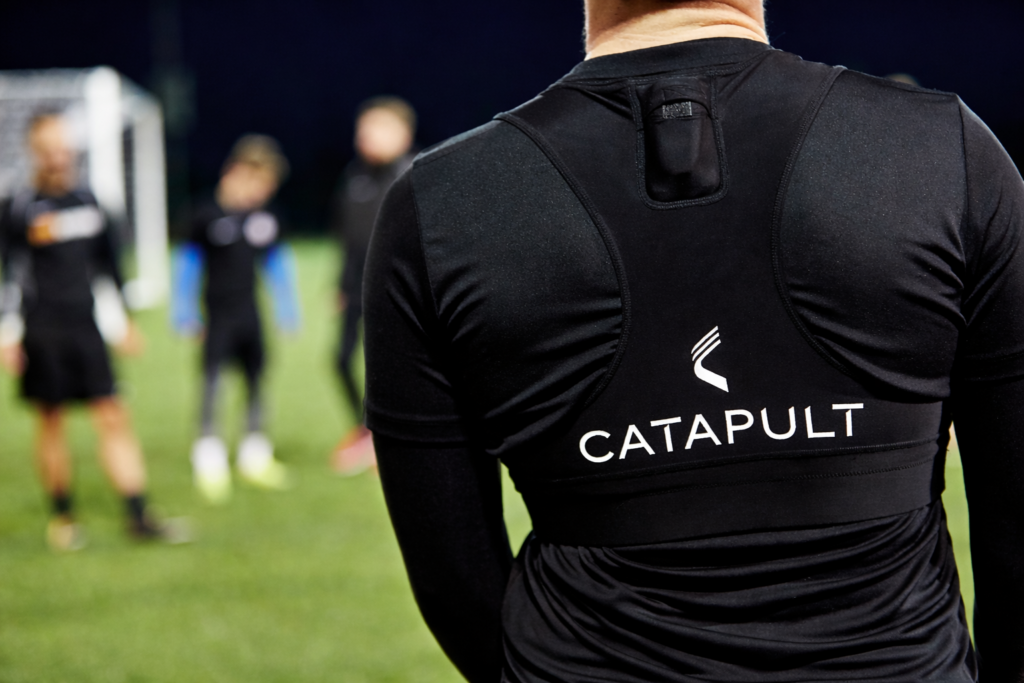
If GPS provides the map of the session, Inertial Movement Analysis (IMA) provides the high-definition footage of how players actually move. IMA categorizes movements such as jumps, changes of direction, impacts, and explosive transitions. These events provide a layer of mechanical context that distance-based metrics cannot capture. Using the Catapult Football Movement Profile (FMP) and inertial data, practitioners can identify hidden movement mechanics that distance based metrics might overlook.
THE “HIDDEN SIGNAL” IN THE POCKET
Consider a creative midfielder operating in “the pocket.” Their GPS data might show similar total distance to that of a winger. However, their IMA data, captured via tri-axial accelerometers and gyroscopes, will reveal an intense volume of:
- Multi-directional movements: Operating in the pocket means playing in a 360° environment, constantly adjusting body orientation to the ball, opponents and space
- Explosive micro actions: Short, sharp turns, body feints and changes of direction used to create space from defenders in tight areas.
- Tight-space contacts: Receiving and protecting the ball under pressure, absorbing contact and maintaining control in congested areas.
“In a rondo or a small-sided game, GPS will capture accelerations and decelerations and show that the drill carries mechanical demands,” Niklas explains. “But that’s only part of the picture. In tight spaces players are constantly exposed to the kinds of movements described above. If you ignore that signal, you risk missing an important source of fatigue.”
THE BAND ANALOGY: SPECIFICITY IN PREPARATION
As described above, different roles and spaces in football create very different movement demands. GPS can tell us whether a player has the physical capacity to compete, while inertial sensor derived metrics reveal the specific movement demands of their role.
Individual drills are rarely about building capacity in isolation. Capacity is the outcome of the whole training process. Instead, exercises should reflect how players move and behave in the game, or how we want them to behave.
Niklas uses a powerful analogy to describe how he applies these layers to training design. Imagine an orchestra preparing for a symphony:
- Individual behaviour: Like musicians preparing for a symphony, each player rehearses the movements and behaviours required for their role. A violinist does not practice the piano to reach “a capacity target”, they practice the behaviour required for their instrument and role.
- The conductor: In football, the head coach acts as the conductor, bringing individual roles together through tactical drills where players combine their behaviours within the team structure, in harmony.
- The foundation: Just as musicians must have the endurance and control to perform through the entire symphony, performance staff ensure that players have the physical capacity to repeat these actions throughout training and matches while monitoring load and maintaining robustness.
“If we only guide training with GPS, we are forcing strikers to do drills that don’t match how they actually move in a game,” says Niklas. “By using IMA, we ensure their preparation is behavior-specific, not just volume-specific.”
MOVING TOWARD PREDICTIVE DECISION RULES
Niklas’s process is built on moving the needle from Descriptive (what happened?) to Predictive (what should we do next?). Key performance question being, how do we get better performance on pitch.
NORMALIZING TO ROLE AND CONTEXT
Ultimately, player behaviour is central to both performance and injury risk. One of the most common issues practitioners overlook is not high load, but unfamiliar load.
Players can repeat very demanding movements if those actions are part of their normal behaviour. But when athletes are suddenly exposed to unfamiliar movement patterns at high intensity, the risk of breakdown increases, and performance often drops.
By combining GPS with inertial data, Niklas focuses on understanding how players typically move within their role. This helps practitioners monitor whether players are operating within their normal movement patterns, or drifting into behaviours their bodies are less prepared to tolerate.
- The Signal: Changes in a player’s typical movement behaviour, even when overall load remains similar.
- The Decision: Adjusting training tasks, intensity or role exposure so players continue to operate within movement patterns they are prepared to repeat.
TECHNOLOGY AS THE ENGINE OF CURIOSITY
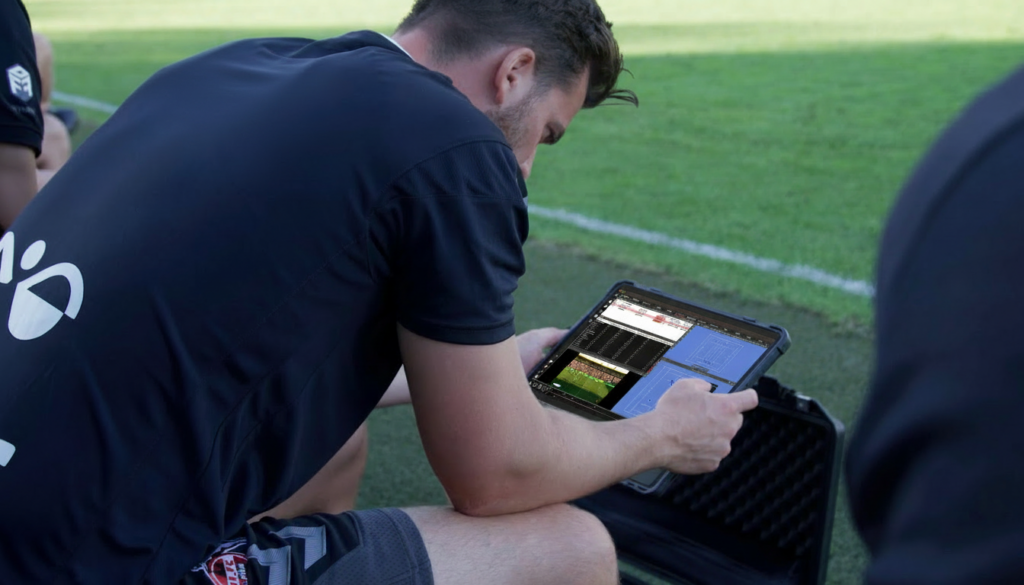
For Niklas, the Catapult ecosystem is the enabler of this curiosity. The ability to pull granular inertial data via API and integrate it into long-term longitudinal models is what allows him to package players for the future.
“To push these boundaries, you need granularity,” Niklas notes. “I use this data to build a narrative for the player, creating their profile and highlighting changes in it. I am not just proving they are fit; I am making their tactical role contribution visible through their movement quality.”
THE NEXT HORIZON: PACKAGING THE FUTURE
Ultimately, Niklas’s approach to sports science isn’t just about winning the next match; it’s about the long-term evolution of the athlete and organisation. By treating data as a language rather than a report card, organizations can begin to package players for the global stage, translating day-to-day performance into a narrative of reliability and tactical fit.
“Players have ownership of what they do on the field,” Niklas says. “But as practitioners, we influence the environment and the people making decisions about those players. Whether it’s a coach, a recruitment department, or a national team selector, data makes a player’s value visible.”
As the football calendar becomes increasingly congested, the ability to find “signal in the noise” becomes the ultimate competitive advantage. By layering the foundational engine metrics of GPS with the behavioral intelligence of IMA, practitioners can finally start providing the insights that actually drive the next decision.
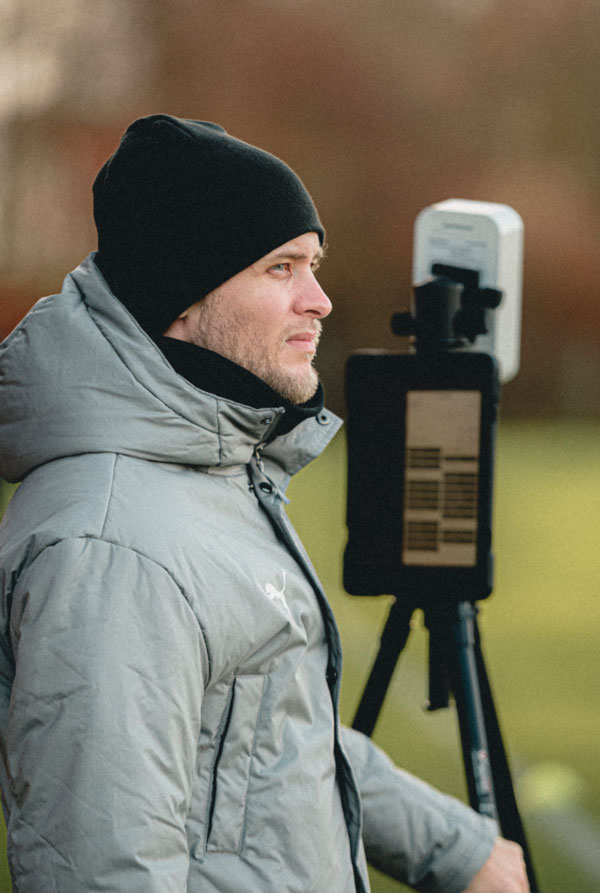
ABOUT THE EXPERT: NIKLAS VIRTANEN
Niklas Virtanen is the Head of Sports Science at FC Midtjylland, specializing in the intersection of performance and decision making in a high performance environment. With over eight years of experience in high-performance consulting and professional sports, Niklas bridges the gap between raw data and on-pitch tactical reality.
Current Role: Head of Sports Science, FC Midtjylland.
Expertise: Performance Optimization, Data-Driven Player Development and decision support.
Philosophy: Data should not act as a scoreboard, but as a shared language, that helps advancing athletic development and decision making.
GPS monitors “Engine” metrics like total distance and speed, while IMA (Inertial Movement Analysis) uses tri-axial sensors to decode “Driver” behaviors like explosive micro-actions and multi-directional intensity.
High load alone isn’t the primary risk; it’s when players encounter movement patterns they aren’t prepared for. Combining GPS with IMA allows practitioners to identify these shifts before they lead to breakdown.
Football Movement Profile (FMP) developed by Catapult uses inertial sensor derived algorithms to detect Football specific movements and categorize them into multi directional (dynamic) and steady state (linear) categories as well as different intensities (low, medium, high).
Identification of these movements allows for better insights on mechanical work done by Athletes during an Activity. Thereby, allowing practitioners to make more informed decisions on load management both live and post Activity.