Ice Hockey Auto Shift Detection: A Cleaner Way to Compare Ice Hockey Workloads
Patrick Love, Senior Customer Success Specialist (Performance & Health) at Catapult Sports
Key Takeaways:
- Auto Shift Detection gives staff a cleaner time window for understanding workload.
- By identifying active shifts automatically, it reduces the burden of manual tagging and creates a more consistent basis for comparing practice and game demands.
- For coaches, video staff, and performance staff, it gives everyone a shared reference point for what players did, how demanding it was, and the context behind it.
Ice hockey coaches know this from experience: two practices can look similar on paper but feel completely different. One may include long lines and coaching pauses. Another may repeat short, intense bouts with little recovery. If both are summarized by one number, the important difference gets hidden.
Total Player Load (PL) tells staff how much work a player accumulated. It does not show how that work was accumulated, or how demanding the active segments were. That distinction matters because PL per minute (PL/min) has not always meant the same thing in ice hockey.
Nightingale et al. (2026) make this point in their framework for selecting external load metrics in ice hockey. They note that published hockey research has used both total game duration and time on ice as the denominator in PL/min. Studies using total game duration, including Douglas et al. (2022) and Neeld et al. (2021), produced 2.1–2.3 PL/min; studies using time on ice, including Byrkjedal et al. (2022) and Perez et al. (2022), produced values around 6.3 PL/min.
Different Windows, Different Workloads
This is where comparing practices and games becomes difficult. In games, video coaches usually tag entire player shifts. In practice, even when sessions are filmed, it is rare to tag every rep for one player, let alone a full roster. Tagging game shifts is already a lot of work. Tagging practice reps is almost impossible.
But if we want to compare practice and game demands, those player-specific time windows matter. Without them, the denominator remains inconsistent. A player may accumulate a similar amount of PL, but the density depends on whether we calculate it across the full session, the drill, the entire shift, or only the active moments.
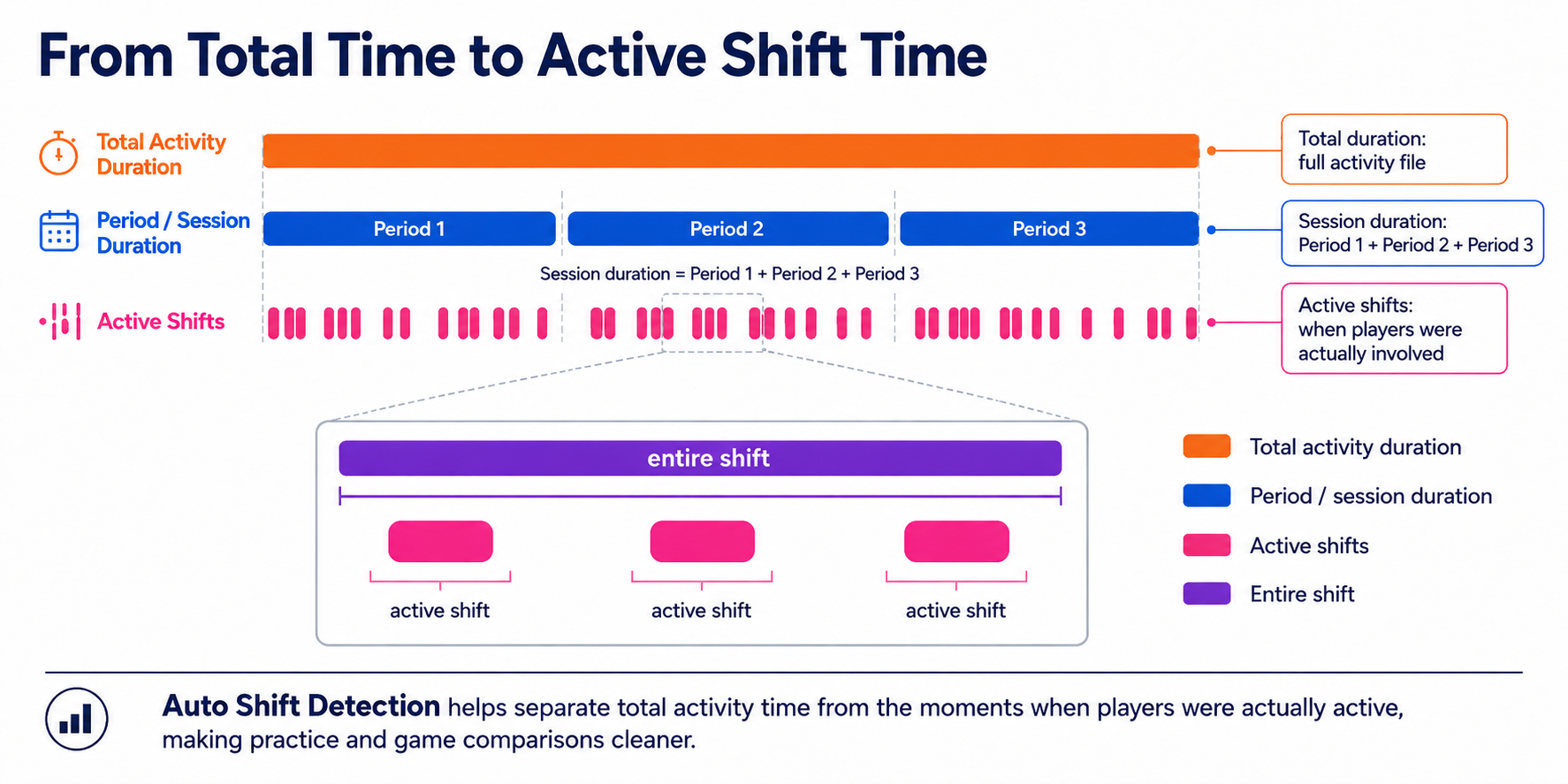
Switching from a session-level clock to an active-shift clock removes bench time and skating between whistles. Total PL dropped because some of that movement was being counted. PL/min usually rises because the denominator shrinks faster than the load being measured. The same drill, the same player, the same data file, can return very different volume and density numbers depending on which clock the staff use. That is why the choice of window matters, and why the active-shift window is the cleanest of the four. It only counts the moments the player was actually participating. The volume number reflects work the player did. The density number reflects how hard that work was while it was happening. That is the time window in which practices and games can be compared.
Unfortunately, we’re back to where we started. How do we solve the issue of manually tagging reps in practice?
Auto Shift Detection: A More Consistent Time Window
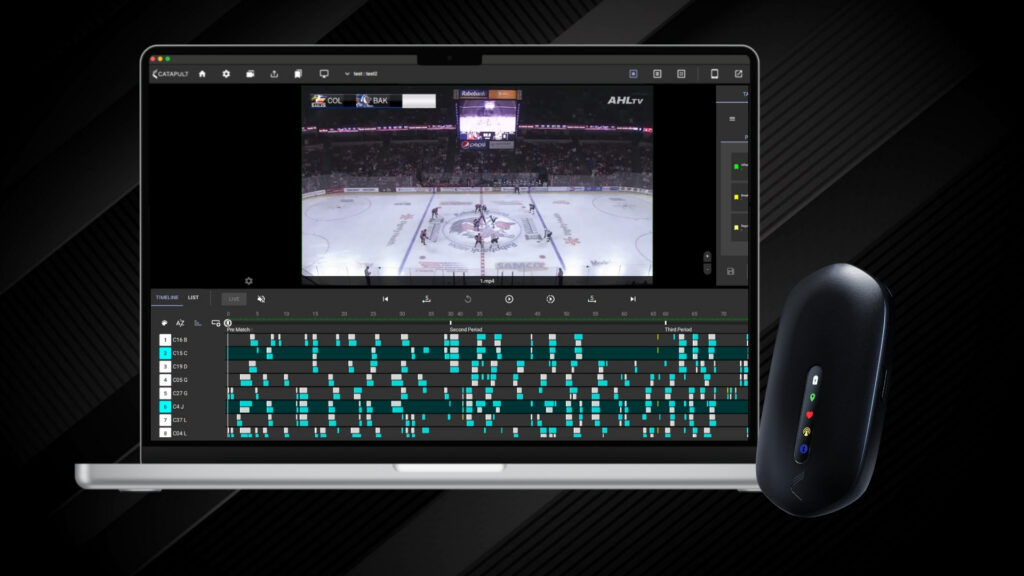
Catapult’s Ice Hockey Auto Shift Detection addresses this by identifying active shifts directly from the wearable devices. Teams get player-specific active-shift windows automatically. This gives staff a consistent lens for the time when each player was actively involved in the session. It also brought about some unexpected results.
In unpublished Catapult Sports analysis from 2026, one AHL practice looked like roughly 58% of game volume at the session level. That dropped closer to 51% when calculated from active shifts. The same practice appeared denser than the game at the session level, around 130% of game PL/min. Once both were viewed through the active-shift window, the same practice dropped to about 73% of active-shift game density.
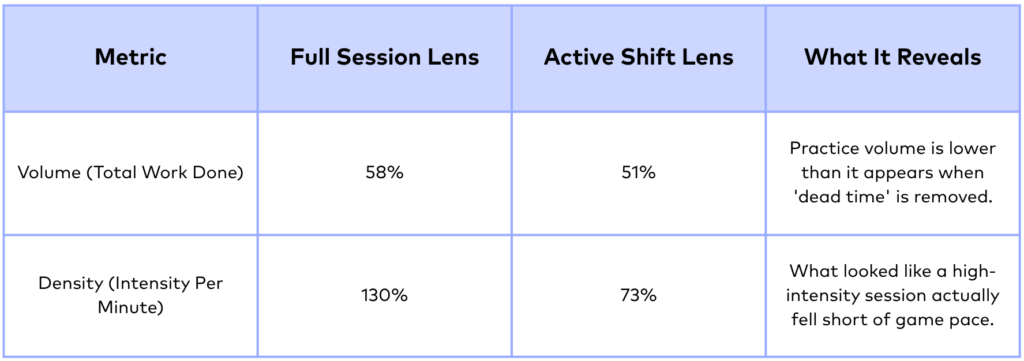
Active-shift data can expose a gap that full-session summaries often hide. Most practitioners recognize that training struggles to match the total volume of a game. Many have assumed practice exceeds game density because sessions are shorter, more structured, and more controlled.
These findings challenge that assumption. When we isolate the periods when athletes are actually active, practice may fall short in both volume and density.
That matters for periodization, drill design, and return to play. Teams need to know whether practice exposed players to the volume and density of active game shifts. They also need to understand how that volume was accumulated. Longer steady blocks of work are different from repeated high-density bouts that reflect the rhythm of the game.
Connecting the Metric with the Moment: Video + Wearable Integration
More data does not automatically create more clarity. Useful reports should match the metric to the question, reduce redundancy, and help teams make better decisions (Nightingale et al., 2026).
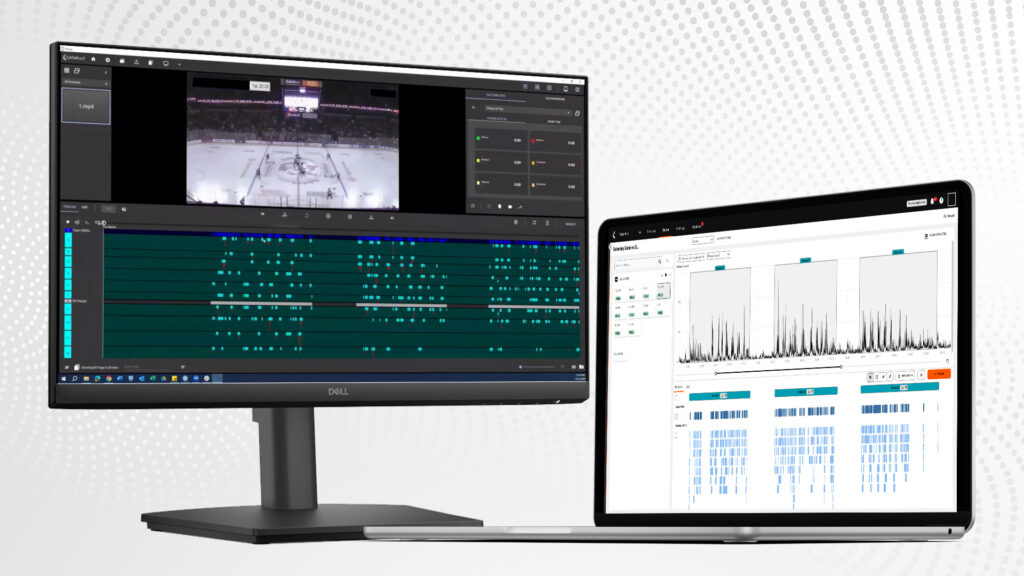
Auto Shift Detection supports that approach by giving selected metrics better context. When active shifts are imported into Catapult’s Focus, teams can move from the metric to the moment that produced it. For coaches, reviewing shifts after a game isn’t new. However, watching player-specific practice reps has never been realistic. Now that active shifts, including practice reps, can be identified automatically, coaches have a way to review player-specific practice work without asking video staff to manually tag every rep.
That changes the workflow for the whole staff. The video coach can find relevant player reps faster. Performance staff can show why a workload spike occurred. Coaches can review high-density efforts in a tactical context. Everyone works from the same source: the same metrics, the same time window, and the same video, all in one place.
Practical Takeaway
Auto Shift Detection gives staff a cleaner time window for understanding workload.
By identifying active shifts automatically, it reduces the burden of manual tagging and creates a more consistent basis for comparing practice and game demands.
For coaches, video staff, and performance staff, it gives everyone a shared reference point for what players did, how demanding it was, and the context behind it.
References
- Byrkjedal, P. T., Luteberget, L. S., Bjørnsen, T., Ivarsson, A., & Spencer, M. (2022). Simulated Game-Based Ice Hockey Match Design (Scrimmage) Elicits Greater Intensity in External Load Parameters Compared With Official Matches. Frontiers in Sports and Active Living, 4, 822127. https://doi.org/10.3389/fspor.2022.822127
- Catapult Sports. (2026). Active-shift vs. period-level workload comparison in elite ice hockey [Unpublished internal analysis].
- Douglas, A. S., Rotondi, M. A., Baker, J., Jamnik, V. K., & Macpherson, A. K. (2022). A Comparison of On-Ice External Load Measures Between Subelite and Elite Female Ice Hockey Players. Journal of Strength and Conditioning Research, 36(7), 1978–1983. https://doi.org/10.1519/JSC.0000000000003771
- Neeld, K. L., Peterson, B. J., Dietz, C. C., Cappaert, T. A., & Alvar, B. A. (2021). Impact of Preceding Workload on Team Performance in Collegiate Men’s Ice Hockey. Journal of Strength and Conditioning Research, 35(8), 2272–2278. https://doi.org/10.1519/JSC.0000000000004076
- Nightingale, S., Hughes, J., De Ste Croix, M., & Pfeifer, C. (2026). A Framework Guide for the Selection of External Load Metrics in Ice Hockey. International Journal of Strength and Conditioning. https://doi.org/10.47206/ijsc.v6i1.526
- Perez, J., Brocherie, F., Couturier, A., & Guilhem, G. (2022). International matches elicit stable mechanical workload in high-level female ice hockey. Biology of Sport, 39(4), 857–864. https://doi.org/10.5114/biolsport.2022.109455
Q&A
An entire shift captures the total time window from when a player steps onto the ice to when they return to the bench. This window often includes dead time, such as whistle stoppages, faceoff setups, or TV timeouts.
An active shift strictly narrows the calculation to the specific moments when the player is actively participating and moving. By removing that dead time, active shifts provide a much cleaner look at true physical output. Volume numbers reflect the actual work done, and density numbers (like Player Load per minute) accurately show how intense that work was in real time.
It all comes down to the denominator (the time clock) you use. Traditional hockey research has calculated PL/min using two very different timeframes: total game duration and time on ice.
When you use the full game duration, the denominator is large because it includes all the time spent sitting on the bench, resulting in lower density scores (typically around 2.1–2.3 PL/min). When you switch to a player’s actual time on ice, the denominator shrinks drastically, causing the density numbers to jump closer to 6.3 PL/min. This variation isn’t a data error; it’s a reflection of which time window you choose to measure.
Historically, comparing practice data to game data was incredibly difficult because manual shift tagging across a full roster is nearly impossible during a practice.
Catapult’s Auto Shift Detection solves this by automatically identifying active-shift windows directly from wearable devices. This challenges common assumptions about training. For example, internal data showed that while a practice might look like 130% of game density when looking at broad session averages, it actually dropped to just 73% of game density once both were viewed through the precise active-shift lens. This automated insight helps coaches design drills that truly mimic the high-density rhythm and volume of real game shifts