One League with One Standard: How the LNR and Catapult Are Redefining Performance in French Rugby
Hannah Knowles, Catapult Sports
Key takeaways:
- League-Wide Standardisation: Through a centralised contract with Catapult, the LNR has equipped all 30 Top 14 (90 devices each) and Pro D2 (45 devices each) clubs with nearly 2,000 Vector S7 devices configured to a single standard, turning athlete monitoring into shared infrastructure rather than a siloed club advantage.
- Seamless Club-to-Country Transitions: Because every club and the French national team operate on the exact same system, player workload data travels continuously between club duty, international windows (such as Antoine Dupont moving between Stade Toulousain and Les Bleus), and club transfers, eliminating “cold starts.”
- Evidence-Based Player Welfare Policy: Comparable, ecosystem-wide data enables the LNR and FFR to run a landmark three-year workload study across three-week, six-week, full-season, and annual windows, using hard evidence to shape future medical and welfare protocols.
Through a centralised, league-wide partnership with Catapult, the Ligue Nationale de Rugby has equipped all 30 Top 14 and Pro D2 clubs with the same elite athlete monitoring technology. The result is a shared performance infrastructure for French rugby that enables data sharing and research that will shape the future of player care.
In elite sport, performance technology has traditionally been treated as a private advantage, something that each club acquires and builds on alone. The Ligue Nationale de Rugby (LNR) has taken a different view. As the organiser of the Top 14, one of the most competitive club competitions in world rugby, and the Pro D2, the LNR has chosen to treat athlete monitoring as infrastructure for the whole game. Every Top 14 club now operates 90 Catapult Vector S7 devices and every Pro D2 club 45. That is close to 2,000 devices working to a single standard across French professional rugby.
The outcome is something few leagues anywhere can claim. These teams are provided with a consistent, comparable picture of player load across an entire professional ecosystem, connected directly to the national team.
Richard Cacioppo, Directeur Compétitions et Stades (Director of Competitions and Stadiums) at the LNR, explains why the league made the move, and what it means for clubs, players and the future of French rugby.
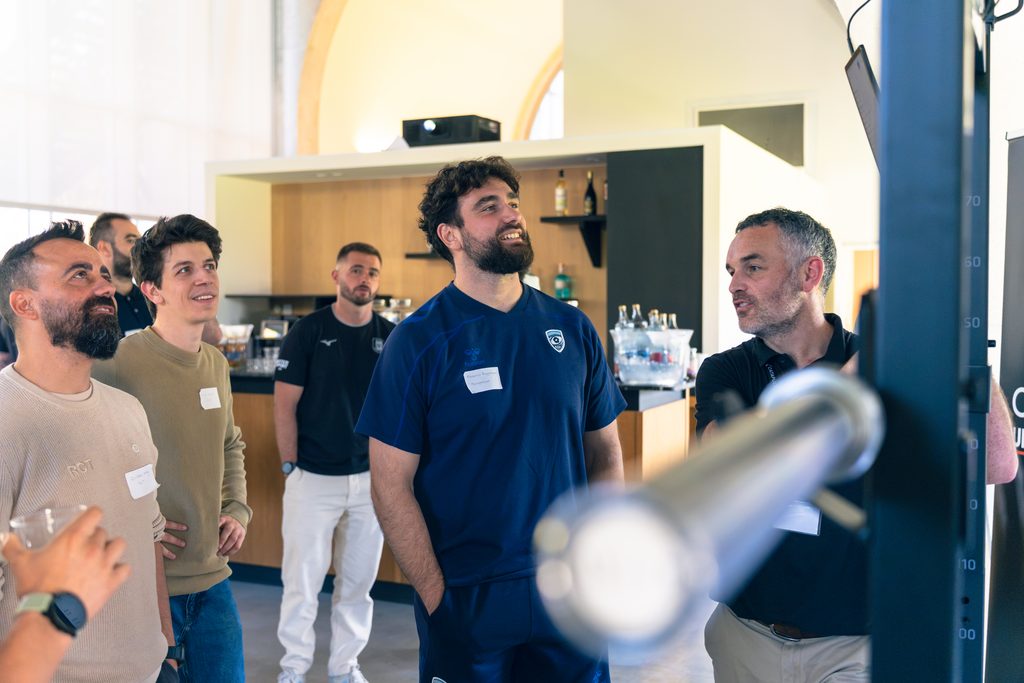
Shared ambition across French rugby
The relationship between the LNR and Catapult is long-standing. It began as a league-negotiated market offer, giving every club preferential access to Catapult while each contracted individually. From the outset, the intent went beyond procurement. Alongside the Fédération Française de Rugby (FFR) and the French national team, the LNR wanted the whole professional game working from the same technology.
“Our ambition with the FFR and the national team was that all professional rugby works with the same device, so we can better manage both the workload and the performance of the players.”
That first model connected individual clubs to the national team, but it stopped short of giving the league a complete view. To build the medical and welfare protocols it envisaged for French rugby, the LNR needed every club’s data in one place, captured in the same way. A centralised contract was the logical next step.
Crucially, the demand came from every direction. The national team wanted deeper insight into player performance. The clubs, already sophisticated users of technology in a sport Cacioppo describes as technology-driven, wanted the best tools available. The league wanted a foundation for policy. “It was definitely a collective push,” he says. “The need was shared by the institution, the clubs and the national team.”
Why league-wide matters
The defining advantage of a centralised model is comparability. Data is only as valuable as the confidence you can place in it and that confidence depends on every club using the same device, configured in the same way.
“If every club uses its own device and its own provider, we cannot do any work on our side. The point of a centralised contract is to be sure that everybody uses the same device, with the same setup, so that we can compare the data.”
Standardisation sets the floor, not the ceiling. Each club retains full freedom to build its own performance strategy on top of the shared foundation and Cacioppo fully expects the clubs to go further than the league ever will. What centralisation guarantees is that the whole of French professional rugby speaks the same performance language.
It also guarantees access to the best. When the LNR ran its tender, most clubs were already Catapult users and their message was clear, they wanted to continue. For Cacioppo, one of the agreement’s key strengths is that the clubs will always benefit from the best technology Catapult has available.
From club data to national insight
With all 30 clubs captured on one standard, the LNR can now ask questions that were previously out of reach. A three-year workload study, run jointly by the LNR and FFR with a dedicated researcher, is examining the true load on professional players across three consecutive weeks, six consecutive weeks, a full season and a full year.
“To make that study, we need good data. We need to be sure we can compare club A with club B and club C. The centralised contract allows us to run studies we were not able to run before and the result will be better management of player workload.”
This is where the partnership moves beyond technology supply. Catapult data becomes the evidence base for league-wide welfare policy, shaping how French rugby manages its players for years to come.

No cold starts between club and country
Nowhere is the value clearer than in the movement of players between club and country. Cacioppo points to Antoine Dupont. When Dupont is with Stade Toulousain, the national team can follow his data. When he joins Les Bleus for a six-week window, Toulouse can still see his workload. Responsibility for the player is shared and so is the information.
“When a player goes to the national team for six weeks, his club wants to know what he is doing. When he is playing for Toulouse, Fabien Galthié wants to know his workload, the intensity of his training sessions, the data from his games. It is fundamental that we can share that data without any cold start.”
The same principle applies when a player changes club. Because the data belongs to the player and is captured to a common standard, it travels with him, giving his new club a complete picture from day one. “This is not something for one club or another,” Cacioppo says. “When the LNR does it, it is for all the clubs.”
Excellence and welfare, together
For the LNR, the partnership is a direct expression of strategy. Sporting excellence and player welfare are the two pillars of the league’s strategic plan and Cacioppo describes the Catapult agreement as a tangible, concrete achievement of that ambition.
It also strengthens the league’s appeal. Players drawn to the Top 14 expect an environment built around elite performance and high-level technology, and increasingly they expect that performance to be underpinned by genuine care.
“Performance without player care cannot work. We want to show players that our clubs are the best on every level. Working with Catapult is one proof of that.”
Bringing French rugby’s performance community together
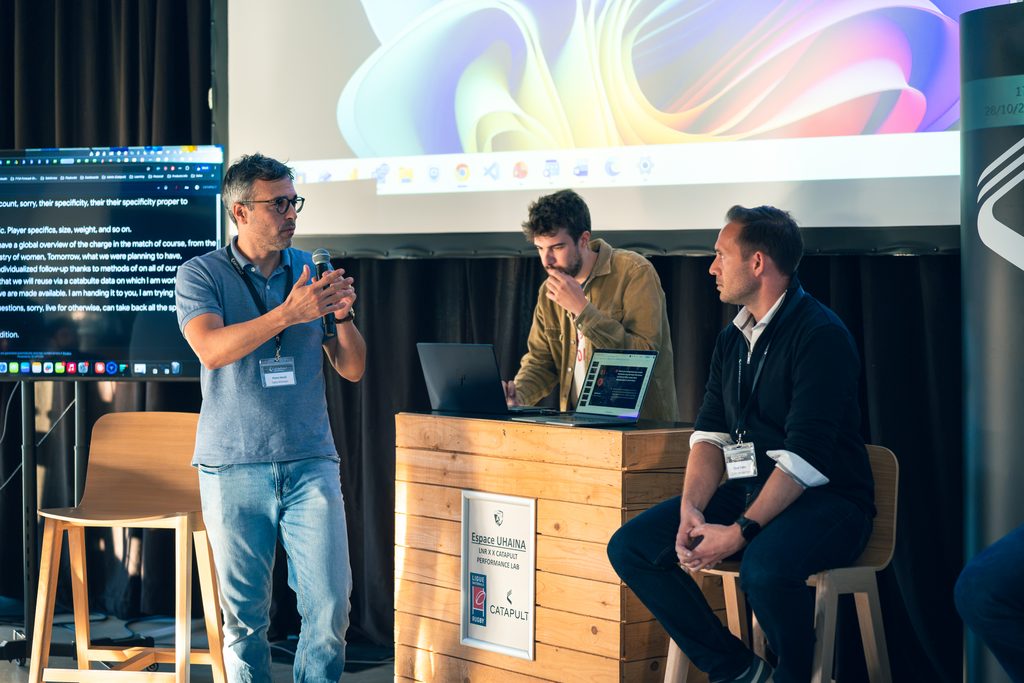
The partnership extends beyond technology. On October 28th, the LNR and Catapult hosted the first annual LNR x Catapult event in Bayonne. It brought together performance staff from across French Rugby to share insight, compare approaches and shape what comes next for performance in French rugby.
For Cacioppo, the value of the event lies in the collective. “Days like this are very important for us, because we can have everybody together in the same room discussing the future,” he says. “This kind of event is something we want to do every season.”
A model for professional sport
The LNR’s approach offers a blueprint well beyond French rugby. By standardising at league level, it has turned athlete monitoring from a collection of isolated club investments into shared infrastructure. One that powers independent research, protects players as they move through the system and aligns clubs and national teams around the same evidence.
It also shows what is possible when two leaders in their fields work as true partners. The LNR brings the scale and ambition of one of the world’s great rugby competitions. Catapult brings the technology and innovation to make that ambition measurable, club by club and player by player.
For Cacioppo, the purpose behind it all is simple.
“What we want is players playing, not injured, and happy to be on the pitch. If we want to grow rugby, we need to show that we are taking good care of the players. In the end, technology has to stay at the service of the player, not the other way around.”
Q&A
The centralised agreement covers all 30 professional clubs across France’s top two divisions. Every Top 14 club is equipped with 90 Catapult Vector S7 devices and every Pro D2 club receives 45 devices, bringing the total to nearly 2,000 devices operating on a single standard across French professional rugby.
Shared data visibility eliminates “cold starts” when players transition between environments. When a player like Antoine Dupont moves from Stade Toulousain to Les Bleus for a six-week international window, or transfers to a new club, both medical and performance staff can track his exact training intensity and match load from day one.
No. As LNR Director of Competitions and Stadiums, Richard Cacioppo notes, standardisation sets the floor, not the ceiling. While a unified setup guarantees comparable data across the league for welfare research, each club retains full freedom to build its own performance strategy on top of that shared foundation.