How Impect aligns football, data and recruitment for better players and decisions
Hannah Knowles, Catapult Sports
Key takeaways:
- More Data Doesn’t Automatically Mean Better Decisions: While clubs have access to unprecedented amounts of data, it only becomes a competitive advantage when there is total alignment across the boardroom, recruitment department, and coaching staff.
- Data Should Stress-Test the ‘Eye Test’: Successful recruitment blends human judgment with objective metrics. For example, Gary Rowett used Impect data to validate his initial assessment of Zian Flemming, confirming both technical fit and physical suitability for the Championship before signing him.
- Alignment Requires Weekly Habits, Not Deadline Day Scrambles: Integrating data into recruitment requires continuous conversation throughout the season. Clubs like Cambridge United and Bradford City maintain alignment through fortnightly reports, regular check-ins, and early succession planning to ensure no player is pitched to a head coach at the last minute.
Football clubs have access to more data than ever before. Event data, tracking data, Expected Goals (xG), video, Packing® and GPS are commonplace at every level of the game. But more data does not lead to better decisions unless the whole club is aligned on what, when and how to use it.
The stakes keep rising. Clubs spent a record $9.89 billion on international transfer fees in men’s football in 2026, an increase of more than 50% since 2024, according to FIFA’s Global Transfer Report. English clubs were by far the biggest spenders at US$3.02 billion. A wrong call has never cost more. And for EFL clubs playing 46 league games a season, or clubs juggling domestic and continental football, a game every two or three days leaves little time to get coaches, recruiters, analysts and the boardroom on the same page.
At Soccer Science 2026 at Brentford’s Gtech Community Stadium, three people who have sat in almost every seat explained how they make alignment work: Mark Bonner, Director of Football at Cambridge United; Stephen Gent, Head of Recruitment at Bradford City; and Gary Rowett, who has managed leading EFL clubs including Birmingham City, Millwall and Leicester City.
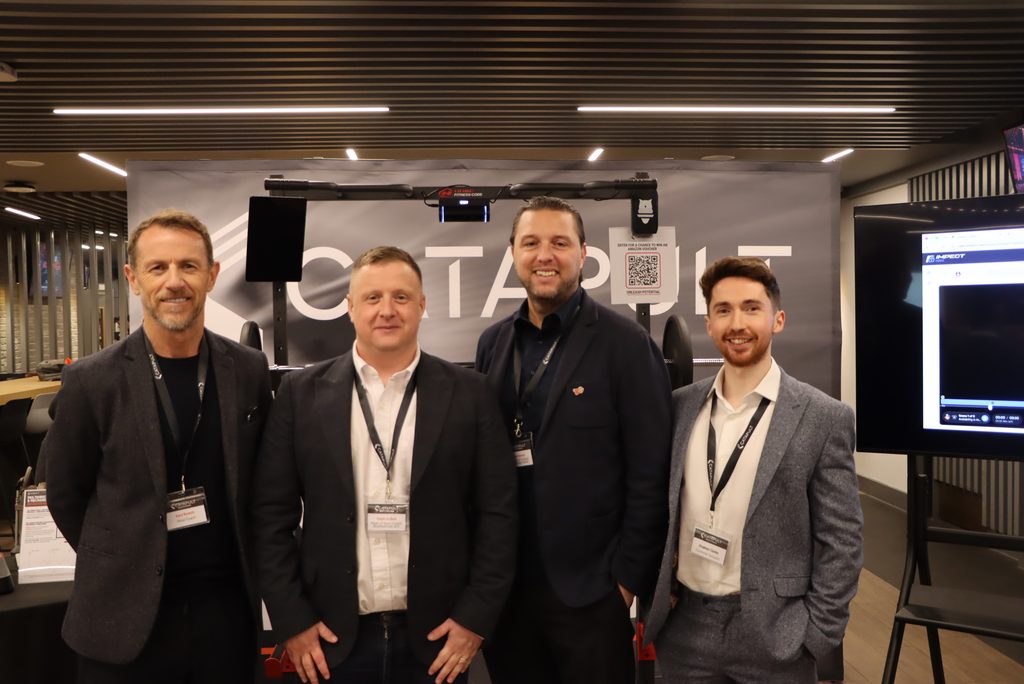
The seats they’ve sat in
Between them, Mark, Stephen and Gary have worked as coaches, analysts, scouts, recruitment leads, managers and directors. Each experience has shaped how they use data to connect departments that have traditionally worked separately.
Gary Rowett: the head coach can no longer do it alone. When Rowett started in management, a head coach might work with four to six staff. Today there are performance, data and recruitment departments, which he describes as “pretty unmanageable for one person”. For Rowett, the way to untangle this complexity is by surrounding yourself with experts who know more than the coach in their own field, and building total alignment between them.
“You have to have alignment. I think that is the biggest thing,” Rowett said. “There has to be some sort of synergy between everybody, so that you’re all trying to achieve the same thing.”
Mark Bonner: from the dugout to Director of Football. Bonner spent five years as Cambridge United’s head coach before moving upstairs. That experience defines how he sees his role now.
“The hardest job in a football club is the head coach’s. No job comes close. So I try to take away some of the stress and make a very difficult task a little bit easier.”
Stephen Gent: building recruitment from a blank sheet. Gent worked through Middlesbrough’s academy, performance analysis, recruitment and loans departments before joining Bradford City as Head of Recruitment in 2022. He arrived with a “blank sheet of paper” to build processes his way alongside the manager, with one clear objective in mind: promotion. In 2025, Bradford clinched promotion from League Two, then reached the League One play-off semi-finals in their first season back in the third tier.
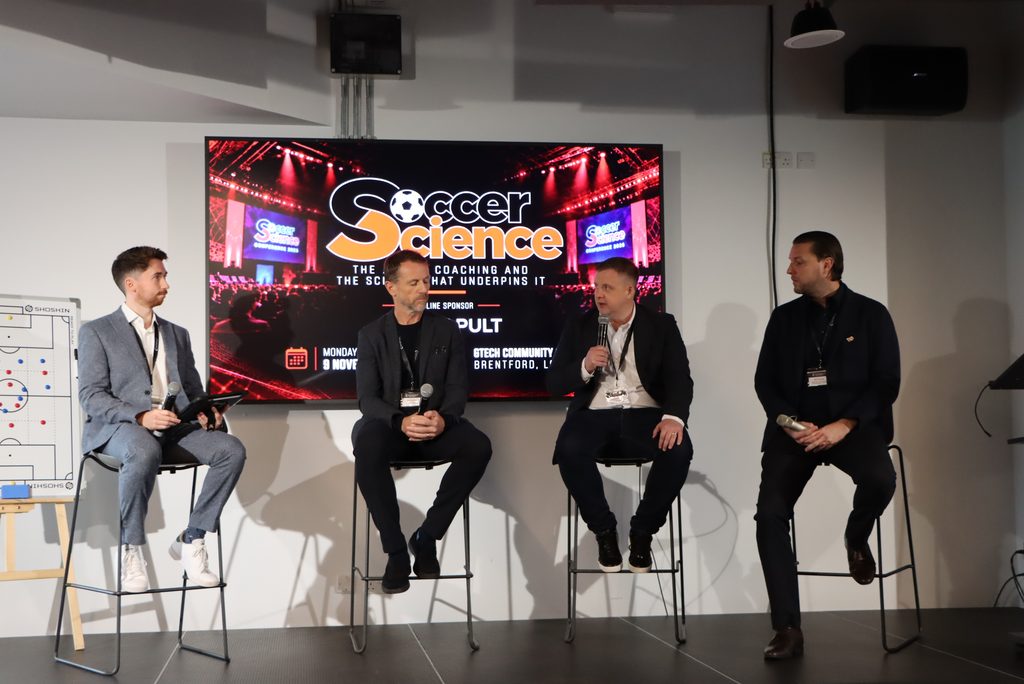
Coaches and recruitment in one conversation
Every good decision starts with agreeing what the team is trying to be. Only with that foundation in place can a club sign the right player or hire the right coach, blending what the eye sees with what the data confirms.
When Graham Alexander left Bradford for Preston North End in September 2026, the club had nearly three years of a settled playing style and a squad recruited to fit it. The aim was continuity. Gent, the CEO and the head of football operations treated the appointment like a signing:
- A shortlist of six managers, four out of work and two in post
- Each profiled on underlying data: playing style, philosophy and points per game
- Three taken forward to interview, followed by references and background checks
- Michael Duff appointed after two meetings
After Cambridge United returned to League One at the first attempt, the club sold Mamadou Jobe, a high-performing 23-year-old centre-back who came through its academy, to Stockport County in August 2026. At the same time, Cambridge shifted from a back four to a back three. Both changes reshaped the profile Cambridge needed.
“If you start with the end in mind, with the team you want to be, it becomes a lot easier to build the team,” said Bonner.
Cambridge runs a succession process for every key position. If a player leaves, who is available within budget, at the right age and stage, with the closest profile? Cathal Heffernan had been tracked for 18 months. He fitted on both the data and the eye test, and Bonner sees him as “potentially the next asset”.
During his time at Millwall, Rowett and his technical coach spotted Zian Flemming at Fortuna Sittard in the Netherlands, scoring important goals against top opposition when his team needed someone to step up. But the Eredivisie and the Championship are very different leagues physically, so they used the data to test their judgement.
“We went to the head of recruitment and the director of football and said: look at Impect, check whether the technical data fits what we’re looking for and whether the physical data fits what the Championship requires. Is it just our confirmation bias, liking the player?” (Gary Rowett)
The data held up, and Millwall signed him in 2022. What no metric predicted was the effect on the dressing room. A young striker new to English football stayed behind an hour after training every day and came in on days off to recover. “The other players started to take a lead from him,” Rowett says, “and he really did change the culture.”
The numbers since have backed the decision. Flemming scored 15 Championship goals in his first season and was named Millwall’s Player of the Season. He then helped Burnley win promotion to the Premier League on loan, and scored 11 Premier League goals for them in 2025/26, the first Burnley player to reach double figures in a top-flight season since Chris Wood in 2020/21. In September 2026 he joined Ipswich Town in a deal reported at £20 Million.
Rowett admits head coaches tend to have strong views on what they want. But the more he learned about the data and the systems behind it, the more he realised he could not do it alone.
“Sometimes you have to put your ego at the door and realise you have to work as a team. That’s the best way of being successful.”
Staying aligned through the fixture schedule
The transfer conversation cannot stop between windows, but the relentless fixture schedule leaves little time for it. All three have built alignment into their weekly routine, so no name lands on the head coach’s desk for the first time late in the window, on deadline day.
At Cambridge, that means taking the information to the manager. Managers have to focus on the next game, so the club brings recruitment to them through a fortnightly report, short video packages to watch on away trips and regular message updates.
“If you just drop names on them on 30 December, there’s probably going to be friction.”
Bonner sees much of his job as gathering opinions and testing them. If a player keeps standing out, what does the data say? What do the scouts feel when they watch him live?
Rowett would go further. He warns against the well-meaning habit of leaving the head coach alone during a busy season, and would rather spend an hour a week, months before a window, getting a feel for targets. As a manager, he spent end-of-season weekends watching games in the Netherlands.
“You can’t suddenly just appear at the end of a season and start helping make good decisions. If you’re part of the process, you have to be part of the process.”
Bradford take a similar approach. Recruitment planning with a new head coach starts as soon as he is in post, with formal sit-downs ahead of each window and day-to-day conversation at the training ground in between.
Clear rules help in the difficult weeks too. Cambridge measure more than points, including average age, asset value, academy graduates and injury rate. The board meets every Thursday, and nobody discusses performances until the Sunday after a match. “The longer things go unsaid,” Bonner says, “the bigger the problem becomes.”

Buy, develop, sell: transfer models
Every club wants assets it can sell on. All three agree that a trading model only works when the team is winning, and when the club finds an edge others are not using.
Cambridge recruit younger players with resale value, but Bonner says the data they look for is much the same whether a player is 22 or 29. He warns against overlooking experienced players simply because they have no resale value.
“Development of players is important and a philosophy and identity is important, until you’re not winning. Winning is number one all the time.”
Bradford’s model mirrors Cambridge’s: assets in the group, but with a demanding crowd, results come first. The recruitment team is Gent, one other full-time member of staff and a couple of scouts, and Impect is part of how a team that size covers the market. The club has already sold a player on to the Championship after one season.
Looking back on his time at Millwall, Rowett warns that if every club chases young assets with the same numbers, nobody gains an edge.
“Everyone’s using the same data to do the same thing. Where’s your USP? How can you be different? We asked ourselves how we could use Impect and weight the data points towards what we needed.”
At Millwall, where the home crowd quickly grew restless with slow, sideways possession, that meant prioritising physicality and players who could play forward accurately and early. And to build assets, Rowett adds, a club still needs a confident, winning team with two or three experienced players to show younger ones what success looks like.
The next 5 to 10 years
As data shapes more of every decision, all three see the same shifts coming.
The first is communication. People moving into football from data roles must explain complex ideas in a way coaches and directors can act on. “The ability to connect and communicate is going to be more important than ever,” Bonner says.
The second is character. Bradford’s demanding home crowd needs players who can handle pressure, and that is hard to measure. Gent invites targets to the stadium to gauge their reaction, but “you’re never 100% sure until they step out on the pitch”. Psychometrics, and how a player will gel with a new group, remain the frontier.
The third is who owns the data. Rowett predicts players and agents will push for access to their own data, for performance and in contract talks, as many top players already employ their own performance staff.
Lessons for other clubs
- Define the model first. Agree what the team is trying to be, then hire coaches and sign players who fit it.
- Let the eye and the data check each other. Rowett’s signing of Flemming started with the eye test and was stress-tested with Impect data.
- Plan succession for every role. Cambridge line up replacements before anyone leaves, and Bradford applied the same discipline to the dugout.
- Make alignment a weekly habit. Regular reports and sit-downs months before a window keep everyone pulling the same way.
- Measure more than points. Wider measures keep the conversation bigger than the last result.
For all three, the lesson is the same. Data works best when the whole club speaks one language. Impect gives coaches, scouts and decision-makers that shared language at every level of the club, from the academy to the first team.
Q&A
With head coaches managing larger staffs and clubs spending record amounts on international transfers ($9.89 billion in 2026), a wrong decision has never been more costly. Total alignment ensures that recruitment, coaching, and data teams share the same objectives and playing style, reducing friction and the risk of costly transfer mistakes.
Clubs maintain alignment by building it into their weekly routines. This includes fortnightly recruitment reports for the head coach, regular sit-downs ahead of transfer windows, and tracking succession plans for key roles up to 18 months in advance, ensuring decisions are made proactively rather than on deadline day.
Data should be used to support and validate traditional scouting rather than replace it. Clubs establish the team’s required profile first, then use data to test whether a player fits that profile physically and technically (stress-testing the ‘eye test’), and finally, evaluate the player’s character and cultural fit.